
April 15, 2026
Youth Homelessness Matters Day: what is takes to prevent youth homelessness.
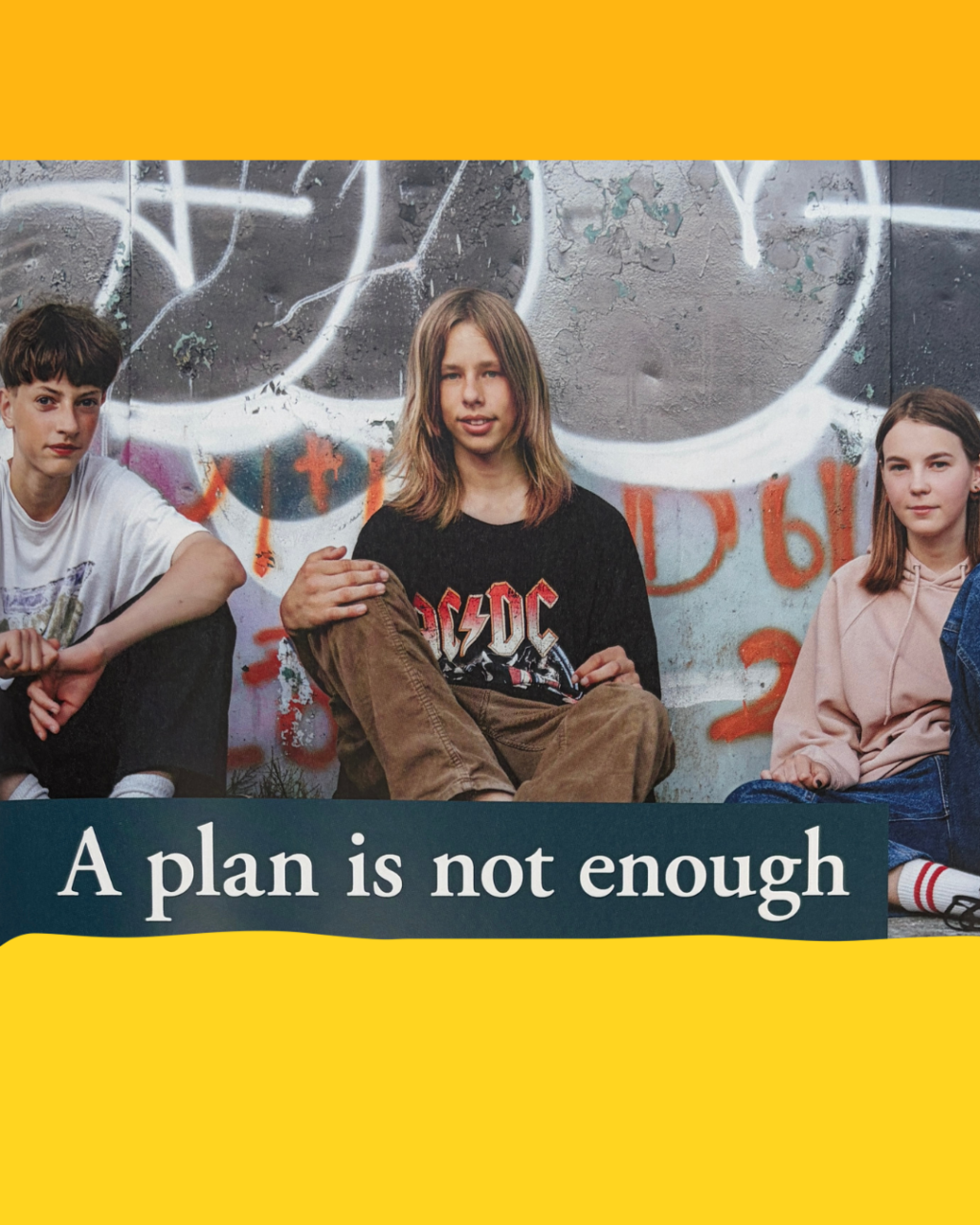
At a time when calls for a dedicated Youth Homelessness Plan are growing, the answer is clear – a plan alone is not enough.
You can read the full article here:
A Plan Is Not Enough: What Will Make a Victorian Youth Homelessness Strategy Work?
There are growing calls in Victoria for the development of a dedicated Youth Homelessness Plan. This call is both timely and necessary. Youth homelessness is not decreasing, services are overwhelmed, and too many young people continue to fall through the gaps between child protection, education, housing, justice and mental health systems.
A Youth Homelessness Plan would provide an opportunity to bring coherence to fragmented responses and articulate a clear vision for prevention and early intervention. I strongly support this call.
But there is a risk in the current conversation. Much of the focus has been on the need for the plan itself and what it should contain.
The challenge for us is whether we are prepared to put in place the governance and accountability structures required to ensure that the plan is actually implemented.
Without those enablers, even the most well-designed plan risks becoming another document that sits on a shelf while the structural drivers of youth homelessness remain unchanged.
Lessons From the Early 1990s
Victoria has faced this challenge before.
In the early 1990s, when Joan Kirner became the first female Premier of Victoria, youth homelessness was already a pressing issue, highlighted by the HREOC Commission Inquiry led by Commissioner Brian Burdekin. Recognising the complexity of the problem, the Kirner Government established a series of interconnected governance mechanisms designed to ensure that policy translated into action.
At the centre of this structure was a Community Reference Group on Youth Homelessness, chaired by Major David Eldridge. The Reference Group brought together practitioners, community organisations and experts with deep experience of the issue. However, what made this structure distinctive was not simply the existence of the Community Reference Group. It was the way it was integrated directly into government decision-making.
Alongside the Reference Group sat two additional structures:
The first was a Cabinet Sub-Committee on Youth Homelessness, comprising Ministers from across key portfolios including housing, child protection, education and justice. This recognised a fundamental reality: youth homelessness cannot be solved by one department alone.
The second was a Senior Officers Group, made up of senior public servants from across the same departments. Their role was to drive coordination across government and ensure that decisions taken at the ministerial level translated into operational action.
What made the system particularly powerful was the deliberate overlap between these groups. Major David Eldridge, as Chair of the Community Reference Group, also attended the Cabinet Sub-Committee and the Senior Officers Group.
This ensured that the voices of practitioners and the community sector were not confined to consultation processes. Instead, they were embedded directly within the machinery of government. Just as importantly, this structure created a feedback loop and a level of accountability. Community expertise informed policy decisions, while government agencies remained answerable for implementation.
The message was clear: youth homelessness was not the responsibility of one portfolio. It was a whole-of-government issue requiring coordinated action.
The Risk of a Plan Without Structure
Fast forward three decades and the systemic nature of youth homelessness is even clearer.
Young people experiencing homelessness are often navigating a web of intersecting challenges: family violence, child protection involvement, disengagement from education, mental health issues, poverty, and in some cases contact with the justice system.
These are not problems that sit neatly within a single department.
Yet government responses often remain siloed. Programs operate within portfolio boundaries, funding streams are fragmented, and accountability is diffuse.
In this environment, a Youth Homelessness Plan, no matter how well written, will struggle to deliver meaningful change unless the systems responsible for implementation are aligned. Too often strategies falter not because their recommendations are flawed, but because there is no mechanism to drive coordination across government.
Departments pursue their own priorities. Programs operate in isolation. Responsibility becomes unclear. Over time, the urgency dissipates and the strategy slowly fades from view.
Without deliberate governance structures, the risk is that a Victorian Youth Homelessness Plan could suffer the same fate.
Rebuilding the Enablers for Implementation
If Victoria is serious about addressing youth homelessness, the development of a plan must be accompanied by the establishment of governance structures capable of delivering it.
The experience of the early 1990s offers a useful starting point. A contemporary Youth Homelessness Plan could be supported by three interconnected mechanisms.
First, a Community Reference Group comprising young people with lived experience, practitioners, researchers and community sector leaders. This group would provide grounded advice on emerging issues and ensure that the realities of young people’s lives remain central to policy decisions.
Second, a Cabinet-level ministerial group bringing together the portfolios most critical to preventing youth homelessness: housing, child protection, education, youth justice, mental health and employment. Such a group would signal that youth homelessness is a shared responsibility across government.
Third, a Senior Officers Implementation Group drawn from across relevant departments, tasked with coordinating delivery, resolving cross-portfolio barriers and tracking progress.
Crucially, these structures must not operate in isolation from one another. As was the case in the Kirner era, there should be deliberate overlap between them to ensure communication, transparency and accountability.
This approach recognises that youth homelessness is fundamentally a systems problem. Preventing it requires alignment across housing, education, family support, income support and youth services.
A plan can set the direction. But governance structures are what turn strategy into action.
From Strategy to Change
In calling for the development of a plan, we should remember a simple lesson from policy history: plans do not implement themselves.
The success of a Youth Homelessness Plan will depend not only on its vision, but on the structures created to deliver it. Without those enablers, the plan risks becoming another well-intentioned document.
With them, it could become something far more powerful – a coordinated effort across government and community to ensure that fewer young people experience homelessness in the first place.
Victoria has done this before. The question now is whether we are prepared to do it again.
Written by:
Keith Waters
Head of Innovation and Advocacy at Kids Under Cover